25 Home Gym Design Ideas to Create Your Dream Workout Room
A home gym can be much more than a room filled with workout equipment. With the right layout, lighting, storage, and finishes, even a small spare room, basement corner, or garage can become a comfortable space that makes exercise feel easier to fit into your routine.
The best home gym designs balance function and atmosphere. You need enough open floor space to move safely, equipment that suits the workouts you actually enjoy, and storage that keeps everything organized. At the same time, thoughtful colors, mirrors, natural light, and a few decorative details can make the room feel inviting rather than purely utilitarian.
Whether you’re designing a dedicated fitness room or working with a compact space, these 25 home gym ideas offer practical inspiration for creating a workout area that looks polished while still being genuinely useful.
Bright and Airy Home Gym

A bright, airy workout room is an excellent choice if you want your home gym to feel spacious and energizing. Keep the main walls light and use large windows or strong overhead lighting to make the room feel open.
Place the largest equipment around the perimeter and leave a clear central area for stretching, yoga, bodyweight exercises, or mobility work. Light wood accents and neutral flooring can add warmth without making the room visually busy.
This approach works especially well in a spare bedroom or dedicated upstairs fitness room.
Warm Neutral Home Gym
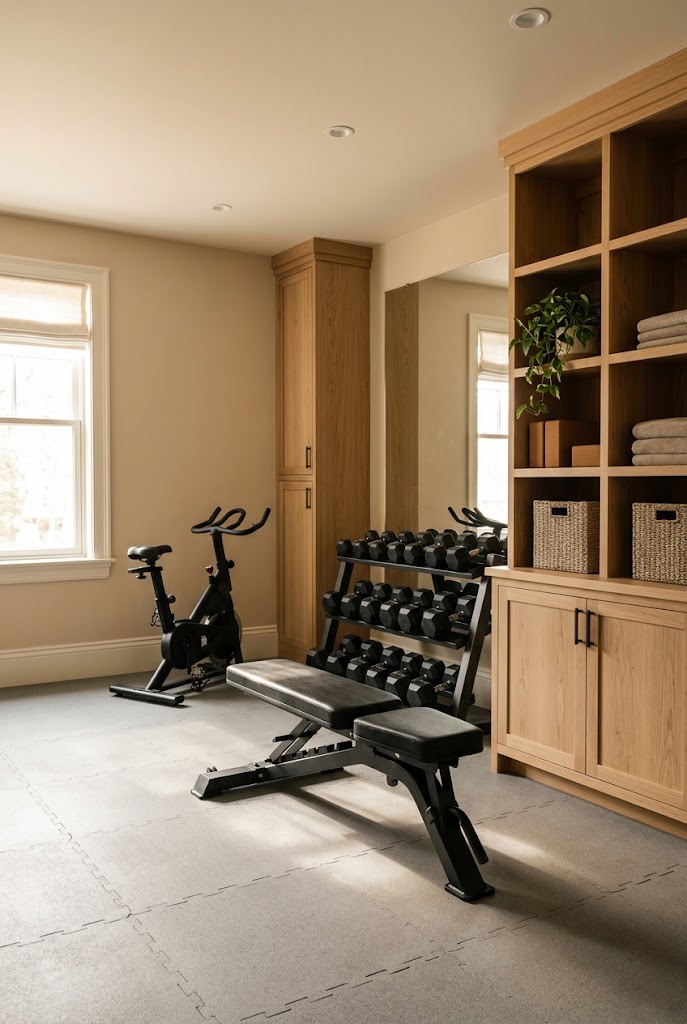
Neutral colors can make a workout room feel calm and sophisticated. Try a palette of warm white, beige, taupe, natural wood, and soft gray rather than stark white and black.
A neutral scheme is particularly useful when the gym shares space with another part of the home. Choose streamlined equipment and simple storage so the room feels cohesive with the rest of the interior.
Add texture through woven baskets, wood shelving, upholstered seating, or a small indoor plant.
Home Gym With a Statement Mirror Wall
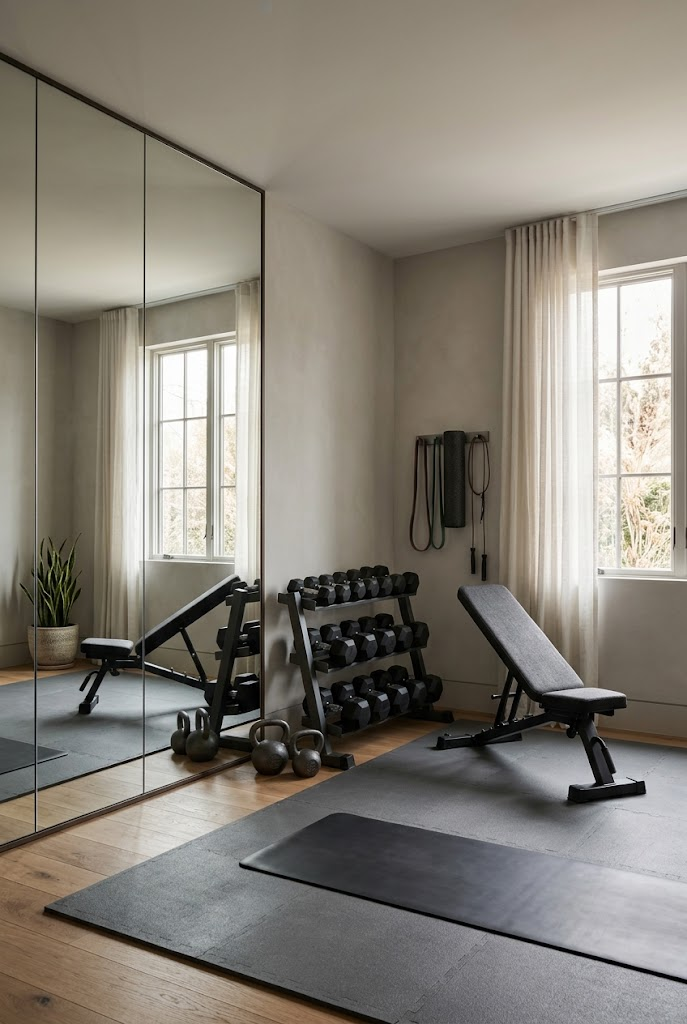
Mirrors are both practical and decorative in a workout room. A large mirror wall can visually expand a compact gym while allowing you to check your form during strength training, dance workouts, or mobility exercises.
Instead of covering every wall with mirrors, consider using one full-height section as the focal point. Keep the opposite side relatively simple so the reflection doesn’t make the room feel cluttered.
Small Home Gym in a Spare Room

You don’t need a huge room to create an effective gym. A spare bedroom can accommodate a compact bench, adjustable dumbbells, resistance bands, a yoga mat, and one larger cardio machine.
Use vertical space wherever possible. Wall-mounted hooks and shelving can keep smaller equipment off the floor while preserving valuable movement space.
A folding bench or compact multi-use equipment can be especially helpful when the room needs to serve another purpose occasionally.
Luxury-Inspired Home Gym

For a more upscale look, combine high-quality finishes with restrained styling. Dark wood cabinetry, stone details, large mirrors, integrated lighting, and streamlined equipment can create a sophisticated fitness-room aesthetic.
The key is not to overdecorate. Keep the equipment visually consistent and allow the architectural finishes to provide most of the character.
Home Gym With a Dedicated Weightlifting Area
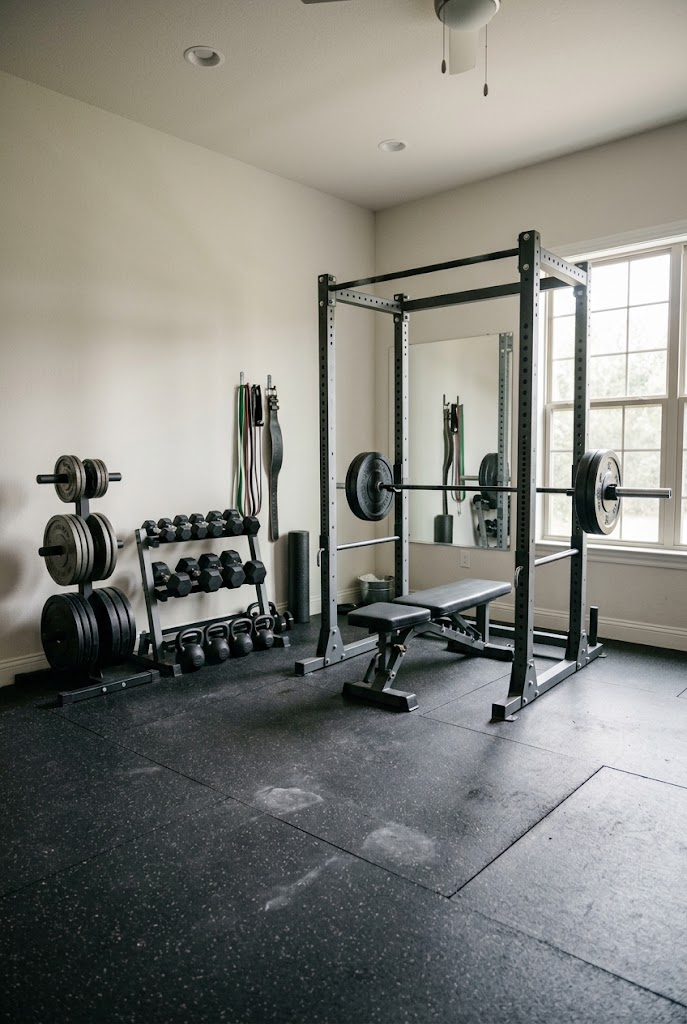
If strength training is the main purpose of your gym, give the weights their own defined zone. A power rack or squat rack can become the visual anchor, while storage for plates, dumbbells, and accessories keeps everything close at hand.
Leave sufficient clear space around the main equipment and use durable flooring in the lifting area.
Cozy Basement Home Gym

A basement can become a surprisingly comfortable fitness space when lighting and finishes are handled thoughtfully. Use layered lighting rather than relying solely on a single ceiling fixture.
Warm wood tones, soft neutral walls, mirrors, and organized equipment can make a basement gym feel less dark and enclosed.
Minimalist Home Gym
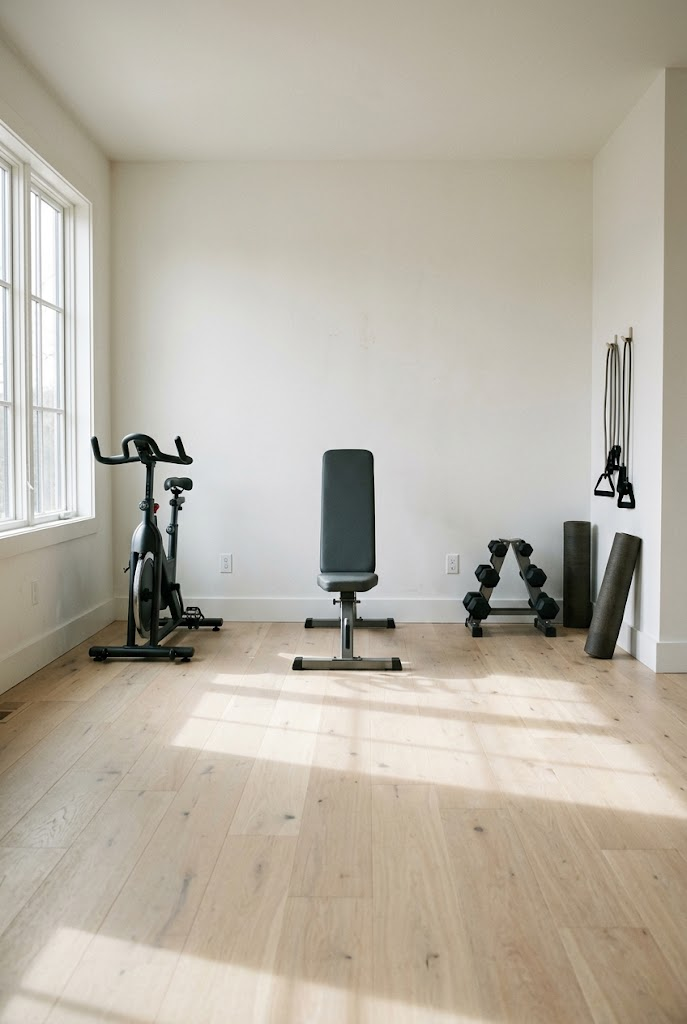
A minimalist gym focuses on only the equipment you actually use. Instead of filling every wall, choose a few versatile pieces and leave plenty of breathing room.
A simple palette of white, light gray, wood, and black can keep the room visually quiet. Hidden cabinets or closed storage are useful when you want the space to look tidy between workouts.
Home Gym With a Wood Accent Wall
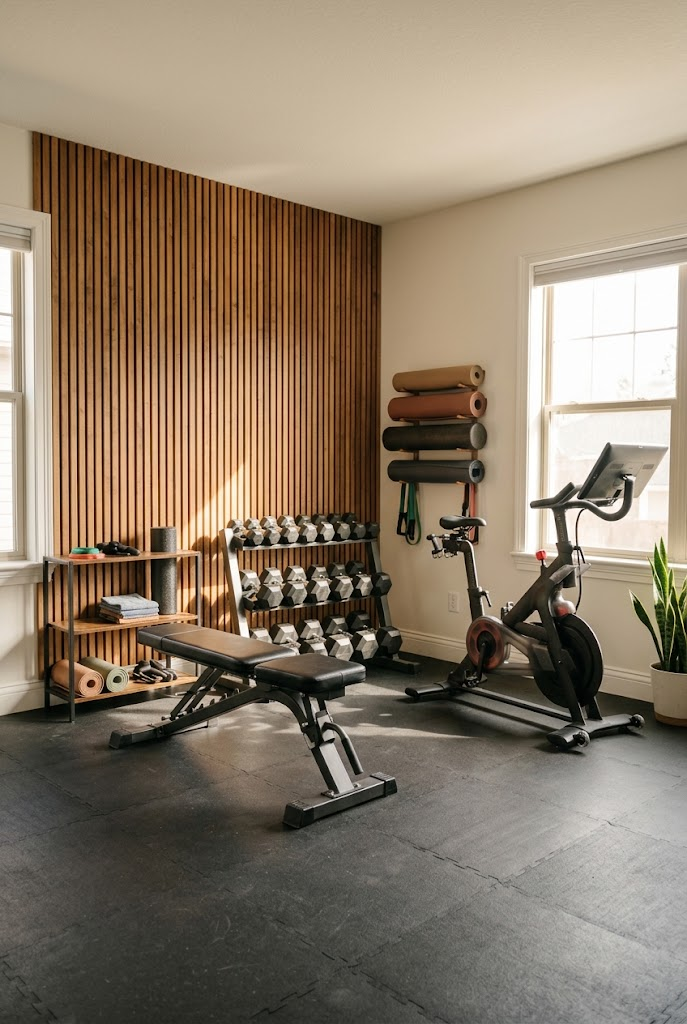
A wood accent wall adds warmth to an otherwise functional room. Vertical slats or natural wood paneling can create a strong focal point without requiring additional artwork.
Keep the remaining walls simple and position the main equipment so the accent wall stays visible.
Home Gym With Wall-Mounted Storage
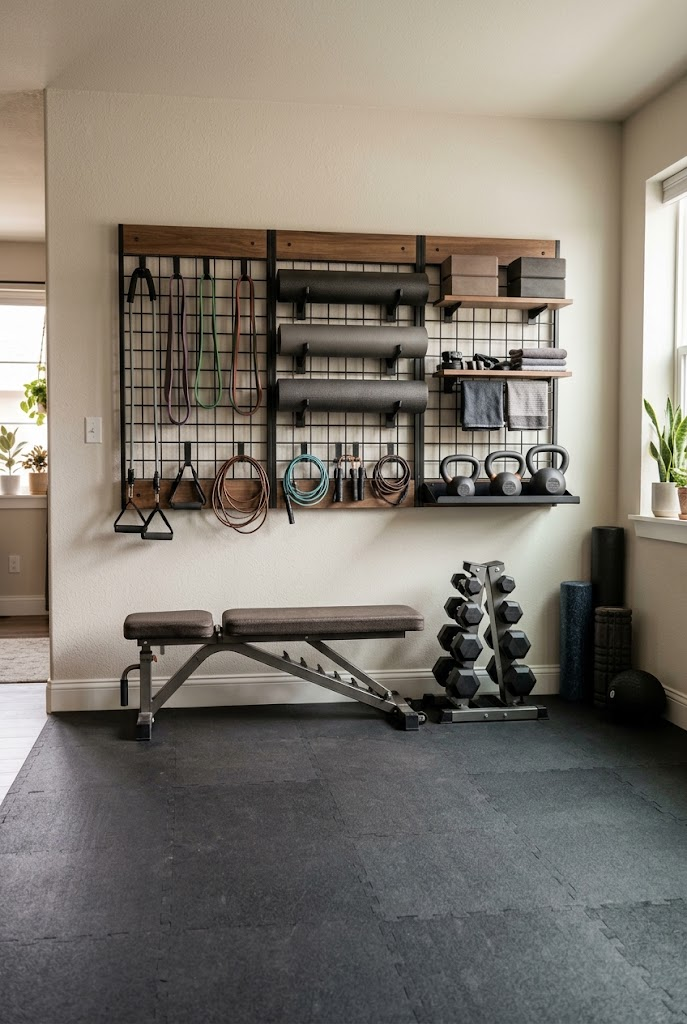
Wall-mounted storage is one of the easiest ways to reclaim floor space. Install hooks, narrow shelves, or purpose-built racks for resistance bands, jump ropes, mats, and smaller accessories.
Keeping equipment visible can also make it easier to grab what you need before a workout.
Home Gym With Natural Light

Natural light can make a workout room feel more inviting during the day. If you have a room with windows, avoid blocking them with bulky equipment.
Position cardio machines or benches to the side while keeping the brightest area available for floor exercises.
Black-and-White Home Gym
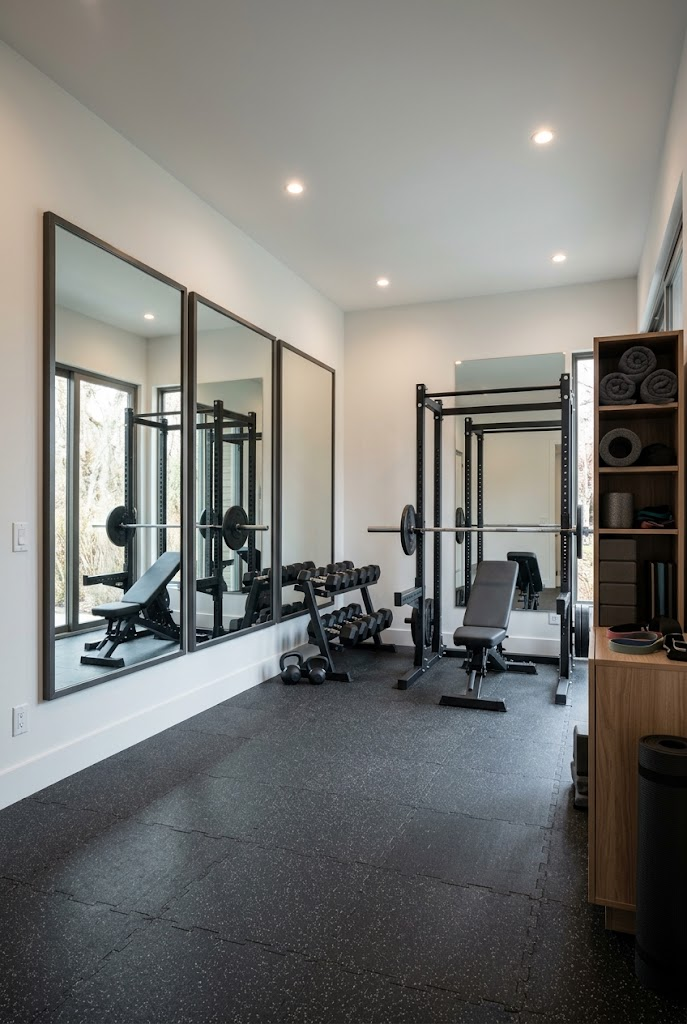
A black-and-white palette creates a crisp contemporary feel. Use white or soft gray walls with black equipment, dark-framed mirrors, and simple graphic-looking architectural lines.
To prevent the room from feeling cold, introduce a little warm wood or textured fabric.
Home Yoga and Stretching Studio

If yoga, Pilates, stretching, or mobility work is your priority, you may not need much traditional gym equipment. Focus instead on open floor space, comfortable mats, natural light, and calm storage.
A low wooden bench, baskets for props, and a few plants can give the room a relaxed studio atmosphere.
Garage Home Gym

A garage can provide plenty of room for larger equipment and strength training. Use durable flooring and organize the space into clear zones rather than placing everything randomly around the perimeter.
Closed cabinets are helpful for keeping accessories contained, while strong overhead lighting can compensate for limited natural light.
Home Gym With a Cardio Corner

If cardio is an important part of your routine, create a dedicated cardio corner rather than spreading machines throughout the room.
A treadmill, bike, rowing machine, or elliptical can sit along one wall while strength equipment occupies another. Keep the middle open for warmups and floor exercises.
Home Gym With a Large TV

A wall-mounted TV can be useful for guided workouts, virtual classes, or simply adding entertainment during cardio sessions. Mount it securely and position it where it can be viewed without interfering with movement.
Keep the surrounding wall relatively uncluttered so the screen doesn’t compete with mirrors or equipment.
Compact Home Gym Nook

A dedicated room isn’t necessary. A well-planned corner of a larger room can become a functional workout nook.
Place a foldable bench or mat beside a wall-mounted storage system, then use baskets or shelves for smaller accessories. When you’re finished, the equipment can be folded or returned to storage.
Home Gym With Built-In Cabinets
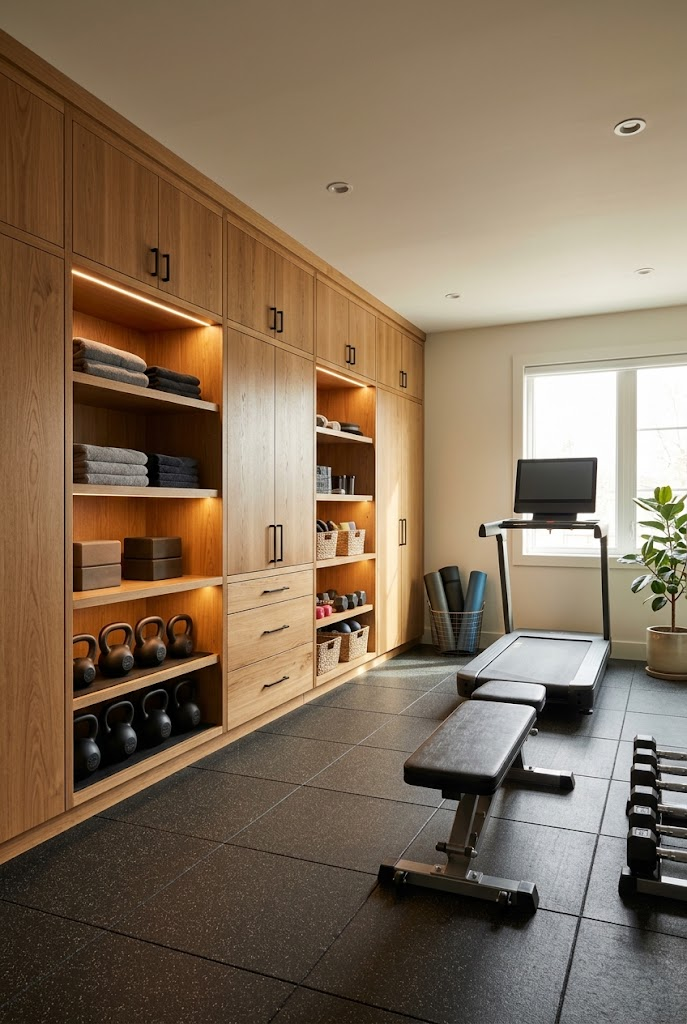
Built-in cabinetry can make a home gym feel more like an intentional part of the house. Use cabinets to conceal bulky accessories, cleaning supplies, towels, and smaller equipment.
Open shelving can then be reserved for attractive or frequently used items.
Home Gym With an Indoor Plant Wall
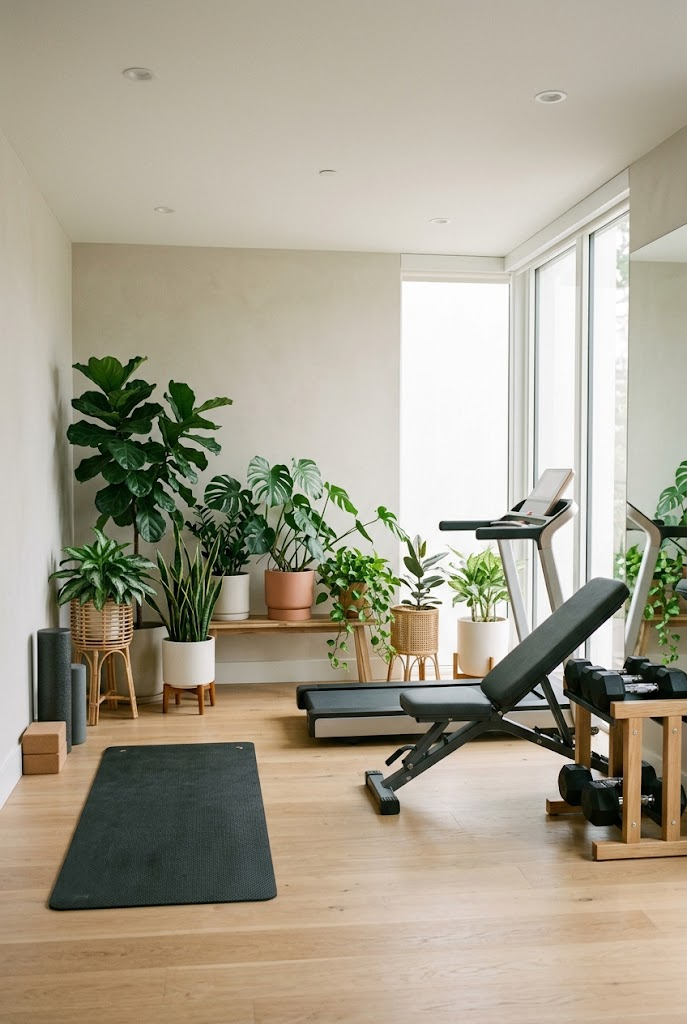
Plants can soften the hard surfaces commonly found in workout rooms. Instead of filling the room with greenery, choose one designated plant area or a narrow collection of planters.
Keep plants away from areas where equipment movement could knock them over.
Rustic Home Gym
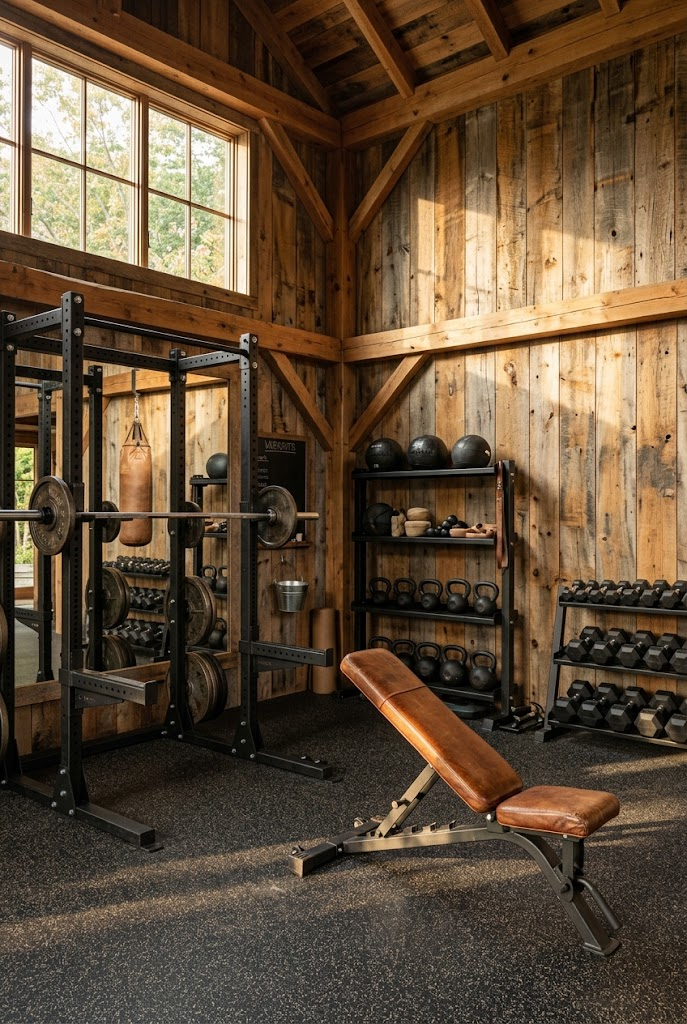
A rustic gym can feel warm and grounded with natural wood, black metal, leather details, and earthy colors.
This style works especially well in a basement, converted barn-style space, or home with existing wood architectural features. Keep equipment simple so the rustic materials remain the visual focus.
How to Plan Your Home Gym Layout
Before buying equipment or choosing finishes, think about how the room needs to function. Start with the largest pieces and place them around the perimeter. This helps preserve a central movement area and makes the room easier to navigate.
Consider these practical questions:
- What workouts will you do most often? Prioritize equipment around your actual routine rather than buying machines simply because they look impressive.
- How much floor space do you need? Leave enough room for stretching, bodyweight exercises, and moving safely between equipment.
- Where will everything be stored? Plan for dumbbells, bands, mats, towels, cleaning supplies, and other accessories from the beginning.
- How will the room be lit? Combine natural light, overhead lighting, and softer accent lighting where appropriate.
- How will the room be maintained? Choose flooring and surfaces that can handle regular use and are straightforward to clean.
- Can the room serve another purpose? If it doubles as a guest room or office, prioritize foldable and compact equipment.
Choosing Flooring for a Home Gym
Flooring is one of the most important practical decisions in a workout room. The right surface should suit the equipment and activities you plan to perform.
Rubber flooring is a practical option for areas used for strength training and heavier equipment. Foam or cushioned mats can work well for stretching and floor-based workouts. In a multipurpose room, removable exercise mats can provide flexibility without requiring a full flooring renovation.
Whichever option you choose, pay attention to transitions between flooring materials so they don’t create unnecessary trip hazards.
Making a Small Home Gym Feel Larger
Small gyms benefit from visual simplicity. Mirrors can make a room feel more open, while light colors and good lighting can prevent it from feeling cramped.
Vertical storage is another major advantage. Wall hooks, narrow shelves, and tall cabinets use height rather than valuable floor space. Equipment that folds away can also make a small gym more versatile.
Most importantly, resist the temptation to fill every available corner. A little empty space is useful in a workout room because movement is part of the room’s purpose.
Creating a Home Gym You’ll Actually Want to Use
A beautiful gym is helpful, but usability should come first. Keep frequently used equipment easy to reach, store accessories close to where they’re needed, and avoid layouts that require you to move several objects before starting a workout.
Comfort matters too. Good lighting, ventilation, appropriate flooring, and a clutter-free layout can make the room feel considerably more pleasant.
Finally, let the space reflect your personal taste. Whether you prefer a minimalist white room, warm wood finishes, an industrial look, or a cozy neutral palette, a consistent design can make the gym feel like a natural part of your home rather than an afterthought.